Cannoli
on river canes
Today cannoli are rolled on steel tubes. Signora Franca still makes them the way they have always been made: around a river cane, cut to size and used for as long as it lasts.
This is not a history-book difference. The cane is porous, it holds heat differently from metal, and the shell that comes off it has a crumble the steel tube cannot give. You understand at the first bite.
Two and a half hours in a home kitchen, from the well of flour on the table to the glass tray.
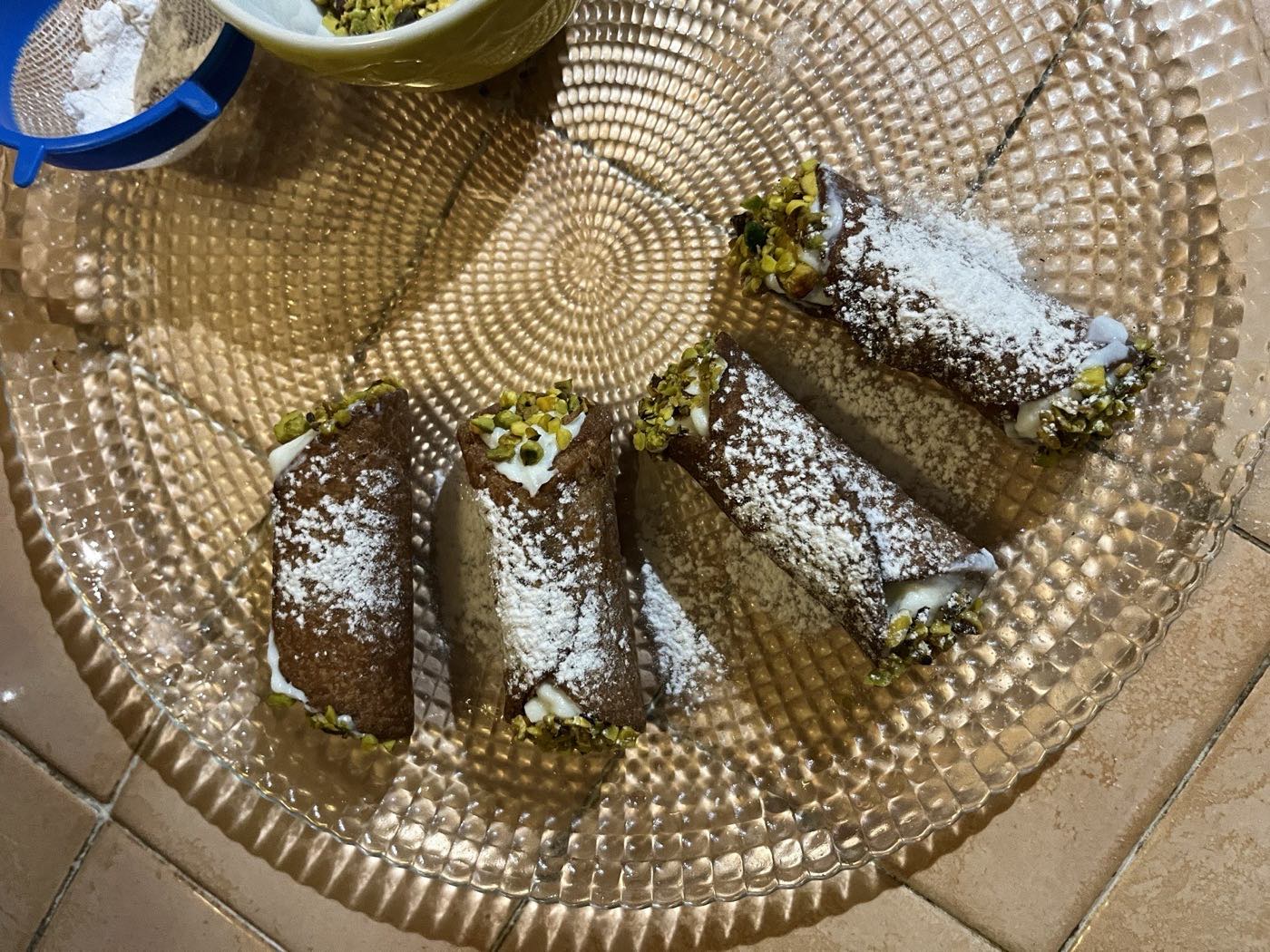
Ricotta, pistachio, icing sugar — and the shell still warm
Before steel tubes there was the river
The canes are cut along the stream, chosen straight and of the right thickness, left to dry. Each cane serves dozens of times, then it is thrown away and another is cut: nothing is bought.
It is the gesture that gave the pastry its name — cannolo, from canna, cane. Anyone who calls it that and makes it with metal has lost the sense of the word.
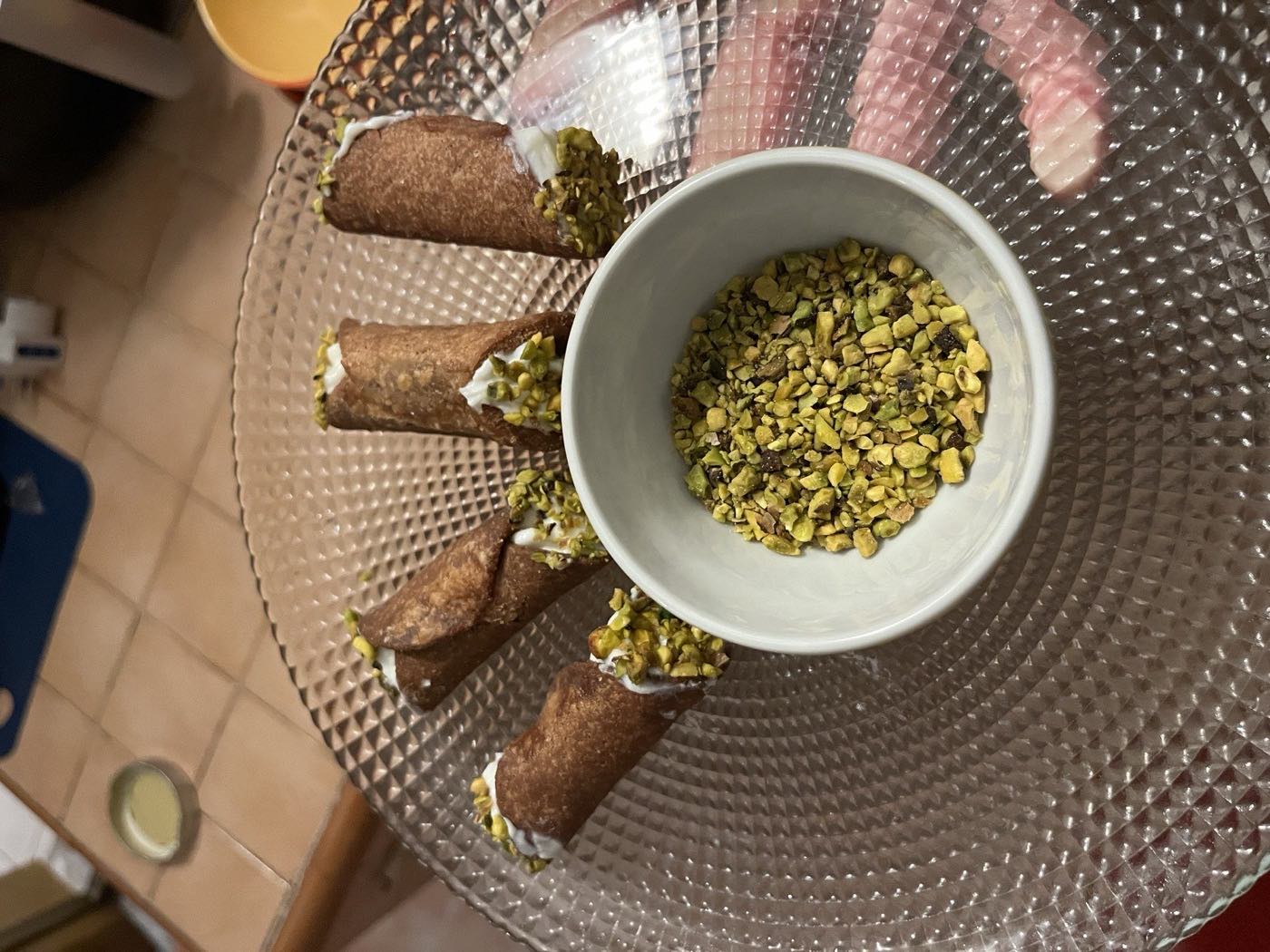
The chopped pistachio, the last gesture
7 moments, 2 hours 30
- 1
The dough, all together
Flour, sugar, lard, a yolk, cocoa and wine: the well is made straight on the table and the hands go in. You knead until it turns smooth and firm.
- 2
The rest
Half an hour in the fridge, wrapped. It lets the dough relax: rolled out straight away it shrinks back, and the shell comes out hard instead of crumbly.
- 3
Rolling out and cutting the rounds
With the rolling pin, thin. Then the cutter, and the sheet yields the rounds — one for each cannolo.
- 4
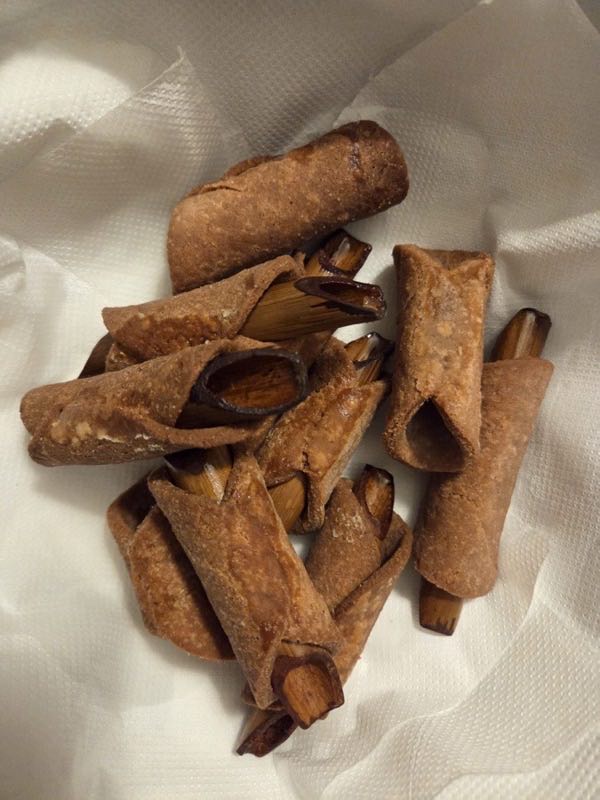
The river canes
The moment that gives the pastry its name. The round is wrapped around the cane and the edges sealed by pressing with the fingers, without squeezing too tight.
- 5
The frying
Into the hot oil, cane and all. The bubbles rise at once and the shell swells: a few minutes and it turns dark and crisp.
- 6
The filling
The cane is slipped out, the shell left to cool, and only at the last moment does the ricotta go in — never before, or the shell softens. The ends are dipped in chopped pistachio and almond.
- 7
The tasting
A dusting of icing sugar and they are eaten at once, sitting down, while the shell is still crisp. It is the only way to understand the difference.
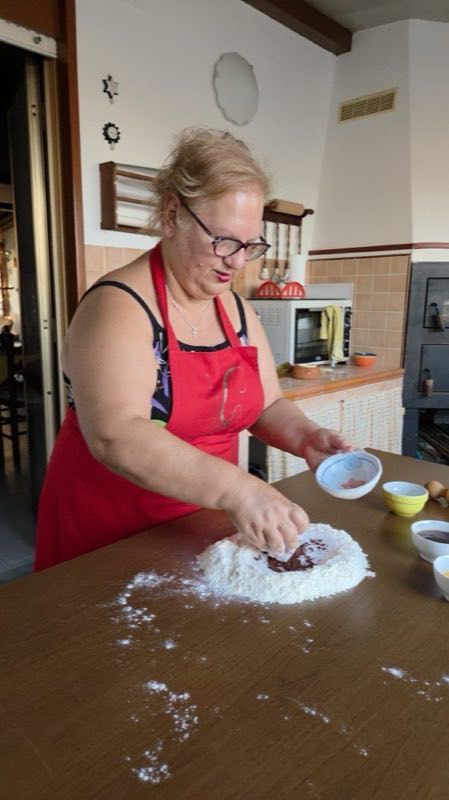
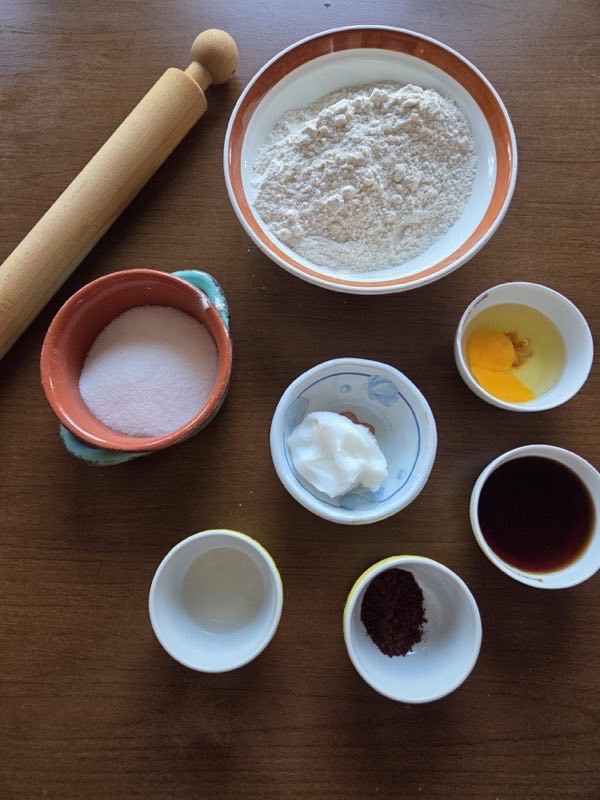
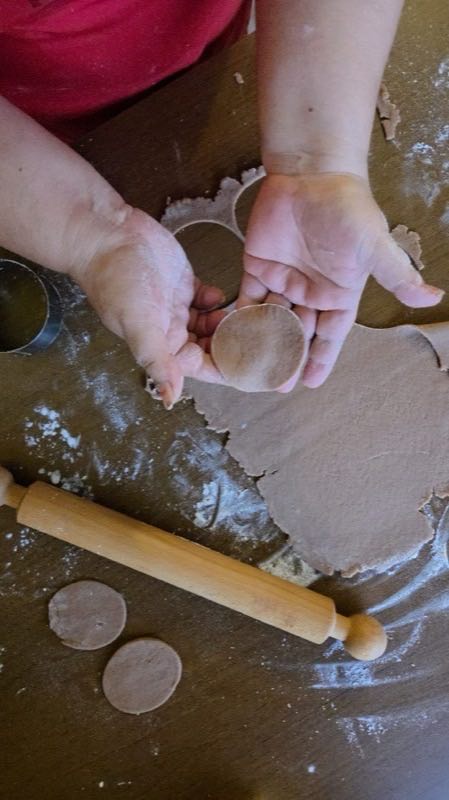
The recipe and the gesture
Whatever is left you take away, but what really stays is something else: once you have made one, you will never look at a shop-bought cannolo the same way again.
And the next time you pass a stream, you will look at the canes.
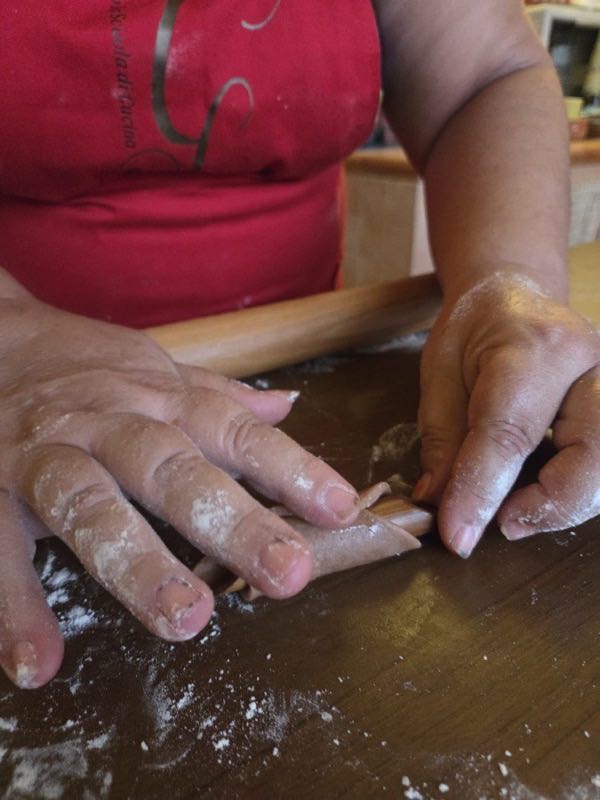
Signora Franca
The river canes · Sicilia orientale