The mostarda
in the quarara
In Sicily the prickly pear grows where nothing else does: on dry-stone walls, at the edges of fields, out of the rock. It is a fruit defended by spines, not to be picked by hand — and for that reason it has produced tools, gestures and words that exist only here.
On a farm near Augusta, Giuseppa makes the mostarda as she learnt it: in the quarara, stirring with the wooden paddle, and shaping it with moulds that in that house have passed from hand to hand for generations.
Two and a half hours that begin at the plant and end at the table. This is not a cookery lesson: it is the telling of a tradition, by the person who keeps it alive.
The wooden paddle in the quarara: the gesture the whole tradition rests on
A tool that exists because of the spines
The prickly pear is not picked by hand. The fruit is covered in fine, almost invisible spines, and detaching it from the plant takes a dedicated tool: u coppu, the traditional picker that in Sicily goes by this name and no other.
This is the point where the whole experience makes sense. The recipe does not come first: first come the plant, its defence, and the gesture someone invented to get round it. The mostarda arrives much later.
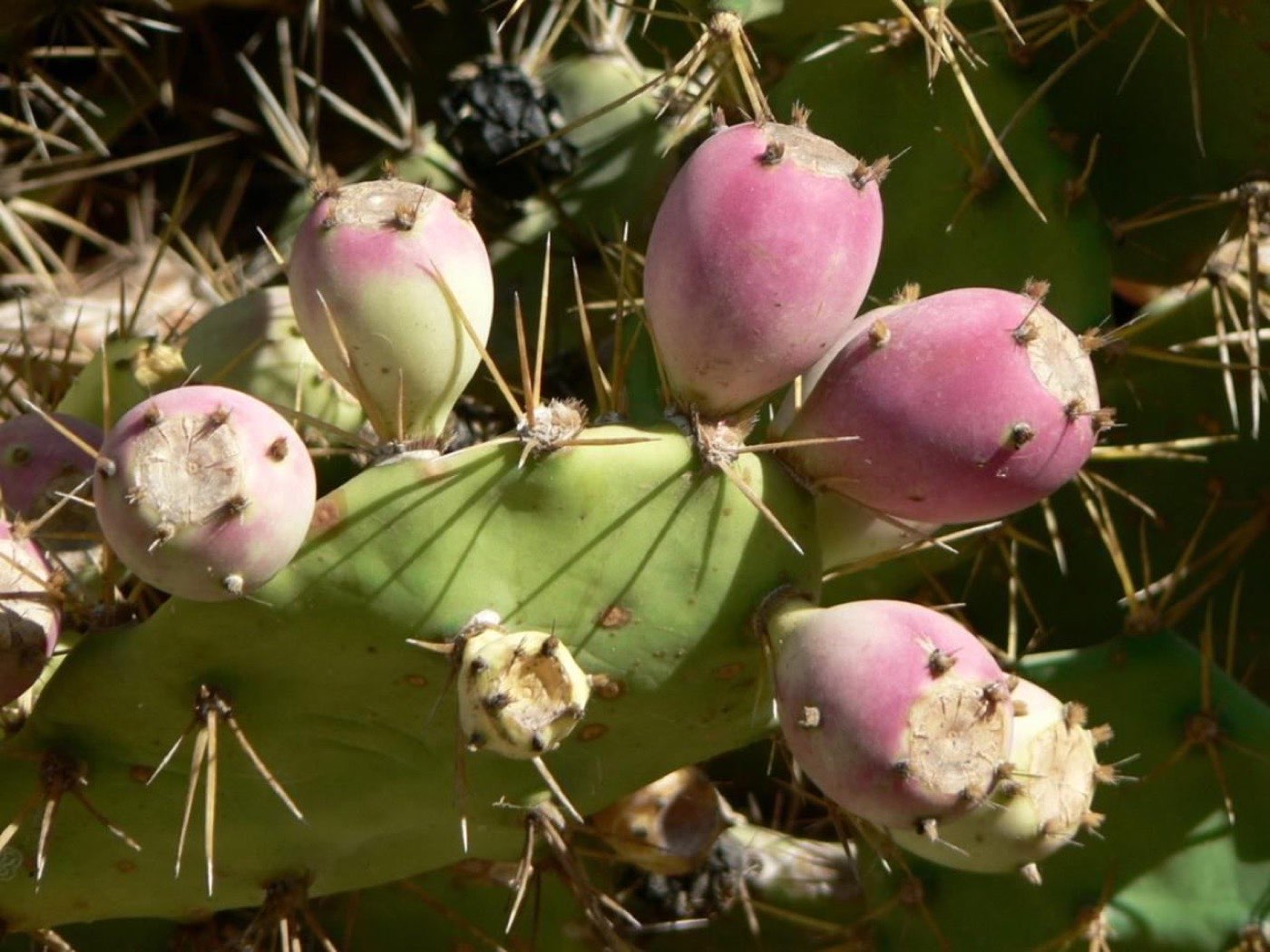
It starts here, spines still on
6 moments, 2 hours 30
- 1
The fruit on the plant
You begin in front of the cactus: the pads, the spines, the differently coloured fruit still attached. Giuseppa explains what place the prickly pear holds in the Sicilian countryside, and how it ended up in the kitchen.
- 2
Picking with u coppu
The traditional tool and the demonstration of how the fruit is detached without touching it. This is the part that always surprises: nobody expects a fruit to need a purpose-built implement.
- 3
From the plant to the table
How to handle it, where to cut, how to score the skin and free the flesh. Here the hands go in: everyone prepares their own, and the fresh prickly pear is tasted.
- 4
The quarara and the wooden paddle
The heart of the experience. The flesh, the cooking, the straining that separates the seeds, the flour, and the slow stirring in the quarara until the mixture takes body. The wooden paddle passes from hand to hand: whoever wants to, stirs.
- 5
The moulds and the drying
The difference between warm mostarda and dried mostarda, and the moulds that give it shape: the decorations, the patterns, the wood worn down by use. In that house they have always been there, and they are not utensils — they are memory.
- 6
The tasting
It closes at the table with three tastings: the fresh prickly pear, the warm mostarda with almonds and the dried mostarda. Three different textures of the same fruit.
The moulds remain, the hands change
From this experience you don't take away a jar: you take away the reason a wooden mould is kept and handed on to whoever comes next.
The recipe alone is not enough to keep a tradition alive. It takes someone to make it, and someone to watch while they do.
Three tastings of the same fruit, at the end
Giuseppa
The mostarda and the moulds · Augusta